Showing posts with label Where Cafes Feature. Show all posts

Tuesday, January 4, 2011

After a Portrait off the Lines of Desire, Regent Street in the Sales by the London Archaeologist


It had seemed simple. Go to Regent Street, set up a tripod down one side street after another, photographing the thick paste of pedestrians smudging across the field of vision at its end, occasionally pick out a fleeting face, perhaps with the help of flash.


These plans rarely come off.


I’d long meant to work the street into a post, as a famous first in town planning, beautiful, successful, frightening. Part of the beauty lay in the elegant ensemble linking the new Regent’s Park to the North down to St James’s in the South, with two cleverly handled corners, a kink and the famous curve making picturesque sense of obstructions on the way.
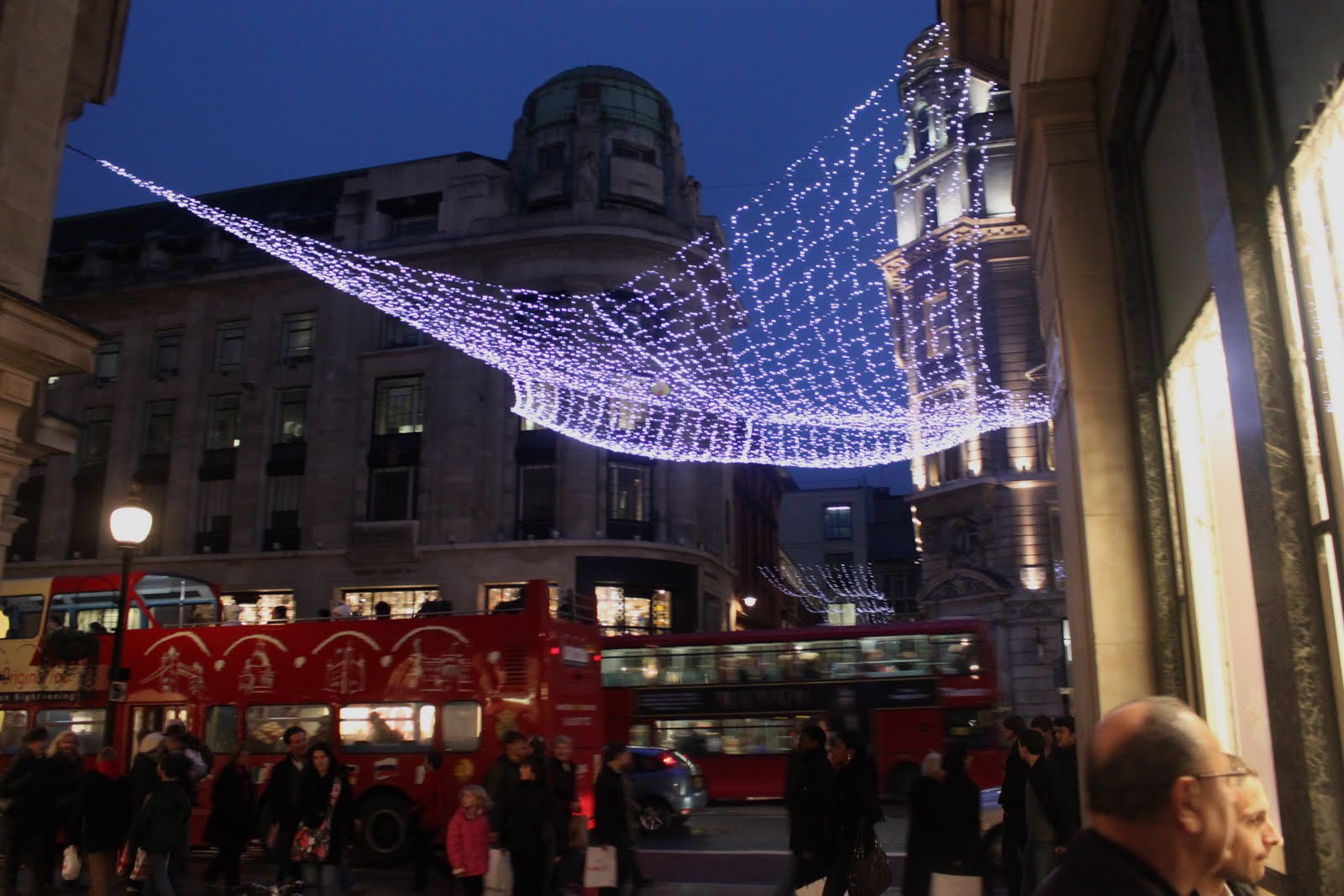


More significant, perhaps, was its other success, the street intended to separate the grime, crime and grind of Soho from the developing Mayfair, forming a barrier to movement, a firewall which, by discouraging the hoi polloi, has managed to this day to see to it that the newer area to the West would remain the most exclusive in London, pompously impressive and, however busy, always dogged by funereal pall.


Soon copied on an enormous scale in the Paris of Haussmann, this first step in a rationalised town planning process has now become only one weapon in a panoply, going under one of the science’s most evocative terms – because what I’d hoped to photograph at work was the phenomenon of the original planned-in ‘line of desire’. A phenomenon originating from informally formed paths across, for instance, grass, and perhaps extending to the internet, to routes between sites, a quick search revealing the term to have generated much traffic of its own, a site dedicated to their sightings perhaps a-plot, with the increasing planning demands of the growing metropoles, someone at some point had to learn to harness its forces for control, and that man was Nash.


If the city’s security forces can use this, clocking citizens as suspect for the simple fact of their having strayed from the more frequented thoroughfare, so surely could the blogger seeking to get a handle on the other forces at work in the city. Through this contrast in these shots, I’d be able to capture in the empty spaces some of what it is that eludes us, bringing us a step further, surely, to pinning down the subject of this blog.


But of course, arriving on site, almost nowhere could such a clear demarcation be found, and when it did seem to show itself, it lacked the expected significance. Clearly activity was much more dense on Regent than the surrounding streets, but the line was blurred, the differences indistinct and, unpredictable, not terribly telling, people forever wandering off down side streets, individually for a rest or to make a call or in couples or groups, to gather thoughts, cuddle, take stock, look at maps, even frequently in vast numbers, endless flows spilling off from the major lines into further others.


At some point, though, as I moved among these formless flows, nevertheless trying to make some sort of sense of it, it occurred to me that there might perhaps be another sort of contrast than that with the quiet side street. A sort of island in the constant movement would frequently occur, and this almost exclusively on the side streets, in the form of smokers, alone, grouped, standing, leaning against a wall, sitting on a step, squatting. Little friendships build up this way, one can see, among people who might usually find no bond between them other than these moments of chilly respite from the hectic activity of the offices or shops indoors, or the rush of pedestrians out-. This evocative sight, unintended consequence of the new smoking laws, was perhaps what would after all furnish something of the contrast I’d set out for, not in any way absolute, but, relative and vague, all the stronger for its instability.


Of course this sort of thinking’s photographic, and would come to nothing without shots. Such shots being almost of necessity portraits, I would have, of course, to approach, and, in the few minutes it would take their pretext to expire, elicit their complicity.


Talking to these people I experienced some of the rare moments when I regret having given up myself, all those years ago. Indeed, I was told by one that he had himself earlier given up, but the Regent Street job had got the better of this, these snatched opportunities too valuable now to forego.


I suspect that the profundity of the pleasure might be related, too, to my own failure to persuade more than a couple to agree to a shot. It’s not that anyone said as much, and the reasons given – because, without wanting to push, I would at least come away with a reason – were surprising for their variety. Some suggested they didn’t want their boss to chance on a posted shot of them, others that they kept their habit secret from absolutely everyone that knew, or felt they knew them. Certainly, when it comes to the big retailers, it proved a general rule that an employee will avoid recourse to a passage next to their own store, but always prefer one up, one down, or across.


Some held that they had something against photographs in general, others only those of themselves. One reason I appreciated, particularly, for its interest, was that she’d in fact given up, really, and a portrait would give her smoking the stamp, the appearance of a reality she’d rather avoid. There were those who were shy or anxious with strangers, and others who clearly didn’t want their colleagues there with them to see them taken for a ride, giving something, be it a mere image of one’s appearance, away to a stranger with nothing in return something of a mug’s game.


But mostly, though no one said it, or even seemed particularly to respond when I offered it as a reason, I suspect that, if the purpose of the moment was withdrawal, release from the hectic transactions of the busiest time of the year on one of the city’s most crowded streets, even in its very midst, to have the lens come rooting around in there on its own agenda would be desecration.

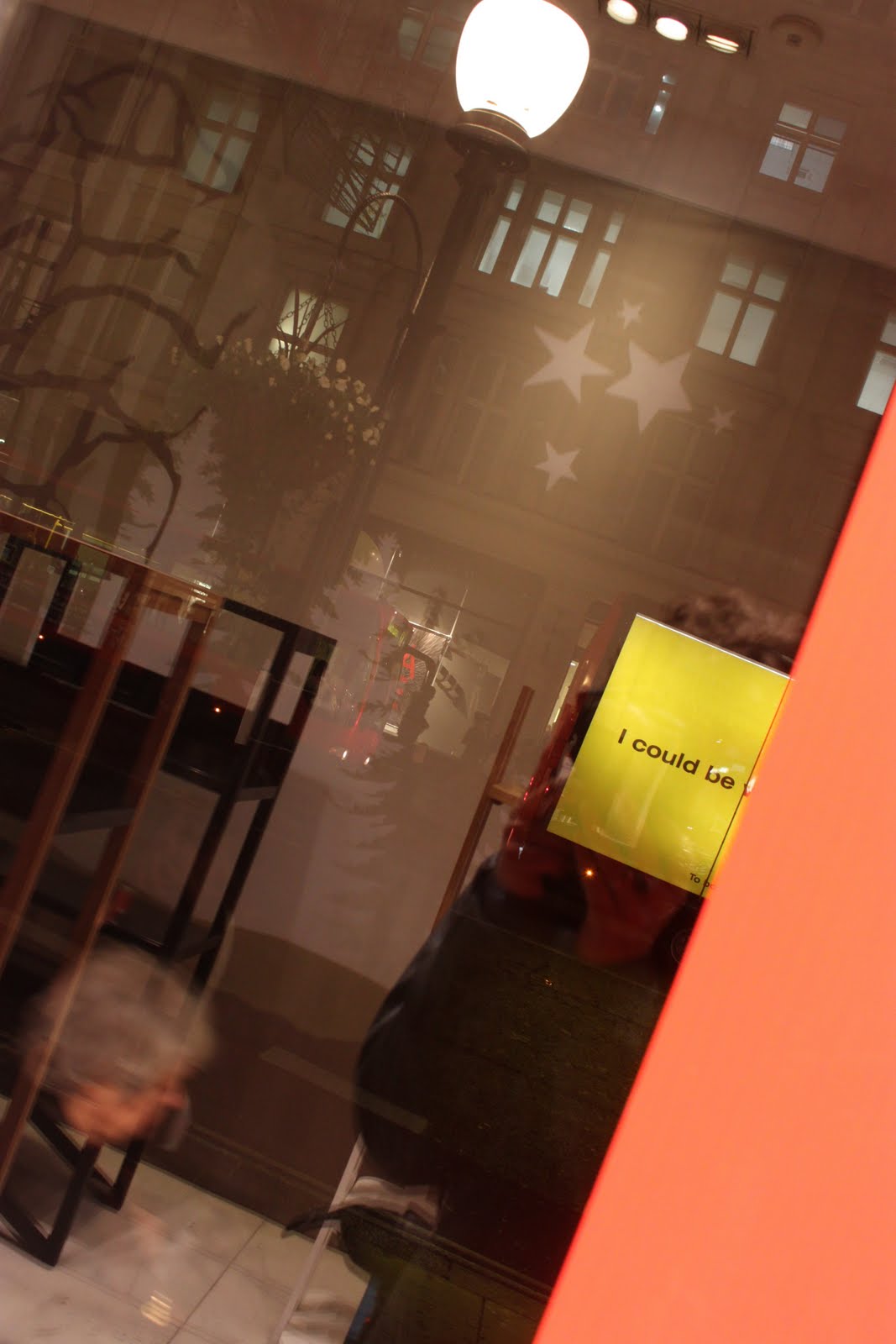


And so the substance of this post is given over to those who, on Regent Street, or mostly off, if only for a moment, cease to engage. The absence of almost all of these is a measure, of their success, certainly, but also perhaps of the blog, at least to have sought, approached what, if unrecordable, may well turn out to have been at the heart of the events considered a city.


Thursday, December 9, 2010

On the Beginning of the End of the End of Goldhawk Road by the Windowless Consultant


Of course a city must always evolve. I don’t mean, only, that not to is death, but rather, for a city, even decay is evolution, just as regeneration can be decay. Think, for the latter, of Westfield shopping centre, subject of a future post, for the former of Goldhawk Road.


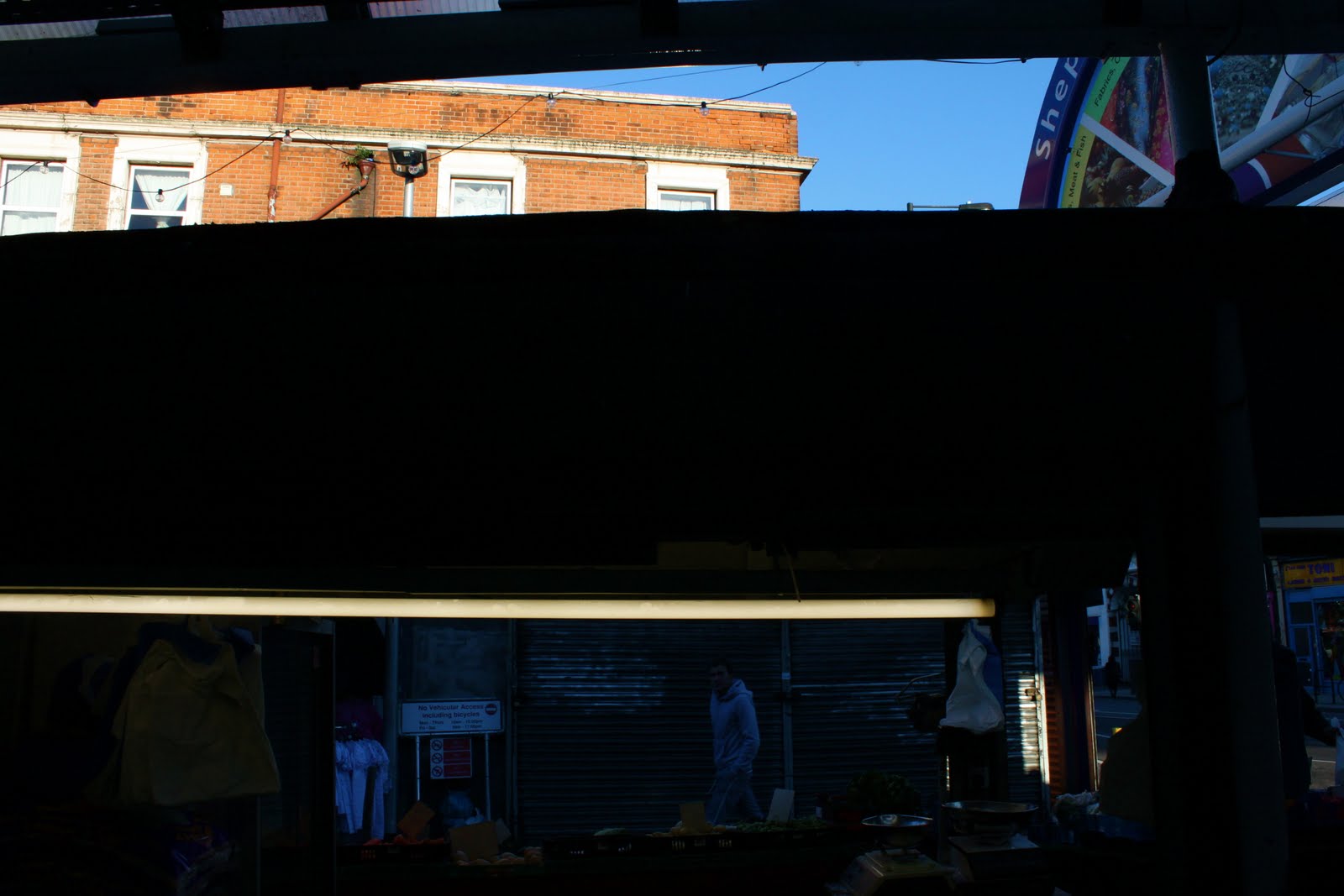
In my incarnation as window consultant, I’ve come here often, after materials for commissions, drapes for backdrop. I’ve been doing so for as long as I remember, since some of my first ever jobs, doing my business and heading back off without, I suppose you could say, considering, noticing what it was as a place. It’s not an area you’d recognise as a thing in itself, just a patch of mostly scruffy houses with a low-end market behind, and it’s only a couple of notices pasted here and there, pretext for conversation, a job having fallen through, that had me considering further.


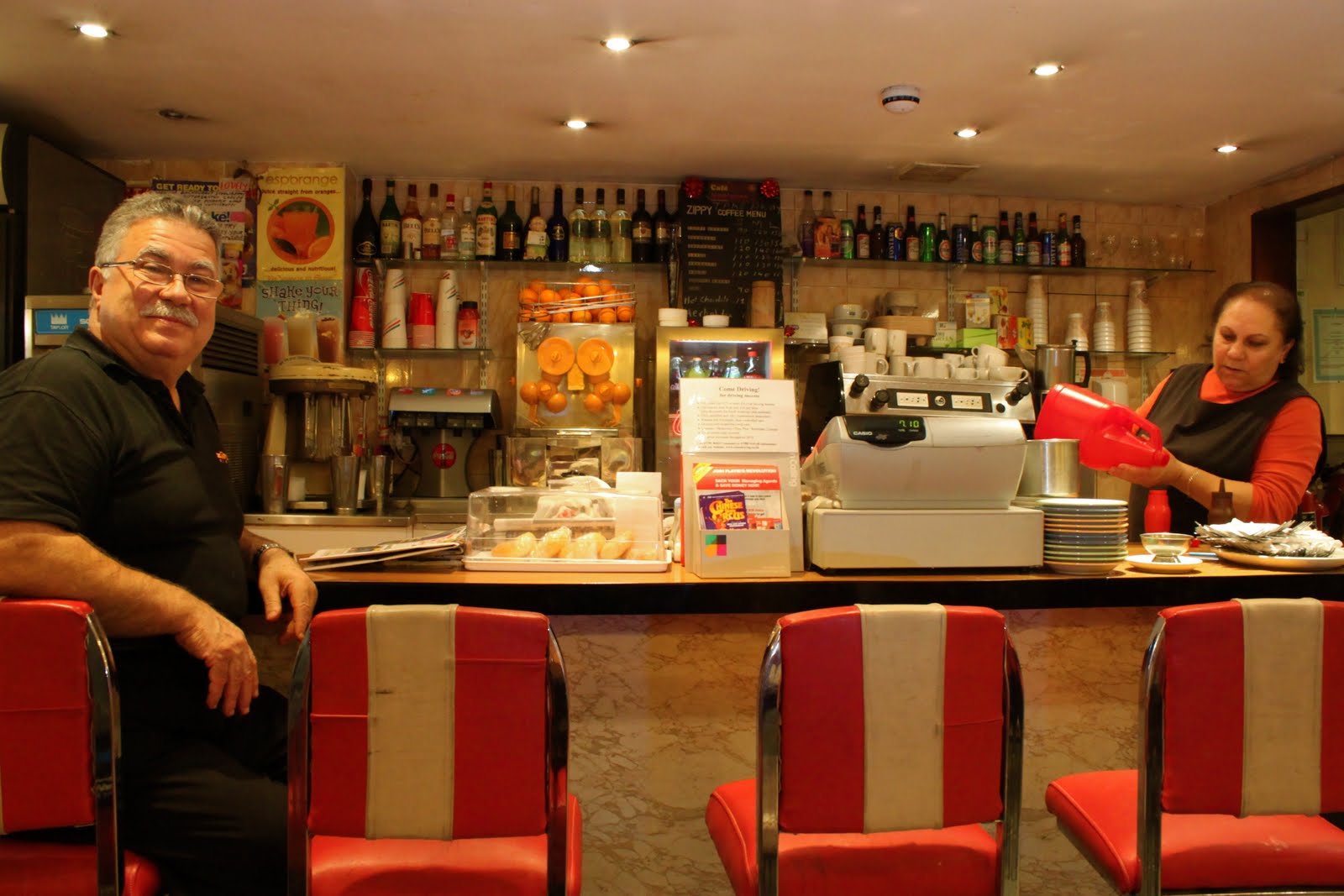
Ruby, of the Goldhawk Road station café, was one of the first to fill me in, happy at the prospect of the market becoming something, as she sees it, more like Borough, serving more quality foods, attracting people after something a little better, more natural, catering to the rising aspirations of the area. Presumably she hoped this business might open avenues for Ruby’s Café itself, allow her to nurture the first shoots already visible in the decorative scheme of olive oil bottles, the freshly squeezed juices, home-made soups of the day and quality herbal teas already insinuating themselves among the more traditional greasy spoon fare. While many are less enthusiastic than she, as to the present shabbiness of the space there is general unanimity, as there is, even among some stall holders, concerning the shoddiness of much on sale.


Something, it’s agreed, must be done, and the council, along with their plans to upgrade the market, find that the strip of houses adjacent along the northern end of Goldhawk Road are of poor quality, and are of frontage inappropriately humble for their scheme.


There is a class of areas whose claim to our affections lies in the melancholy allure with which they seek to be overlooked, to be passed in a hurry by those too busy to notice that the excitement they head for beyond may be surpassed here, less strident, intangible, more profound. And so it was that, discovering that it was to disappear, having visited so often, I at last became aware that this, here, was such an area, its quality, tagged for demolition, suddenly noticeable for having been overlooked.


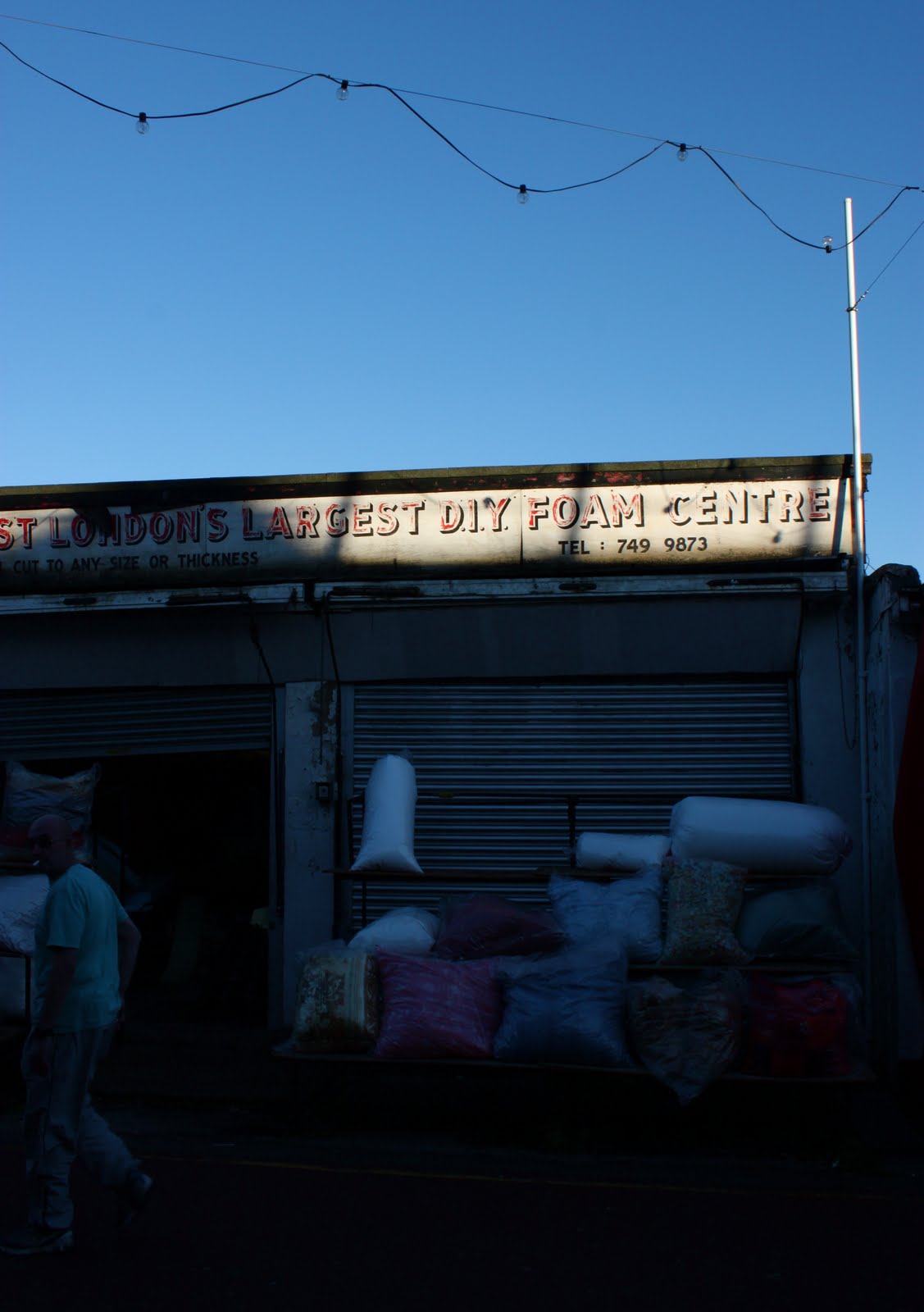
Who could explain to the council that to knock down the authentic set of the key meeting of Quadrophenia, when Jimmy encounters Kevin, mod meets greaser, is a mistake, in the same way it is to dislodge Turker and Emete from their place at the helm of the last Zippy café, the first Zippy ever in London, perhaps anywhere outside of America? That people come from the States, where the franchise still abounds, to try the only Triple Shake left in the Old World can’t be expected to find its way onto the planning documents, or the pride of the textiles shops in that other local phenomenon, their accelerating proliferation. There were, it appears, a mere five or six years ago just four of these shops, but, with people beginning to cross London for them, another would open, then another and still others, attracting still more customers, until now people come from everywhere, they tell us, Arab royals in limos up to the inappropriately humble little pavement, people up from out of town going to marry, fashion students needing an edge in a new design.


More intriguing still than the facts themselves are their recorders, the shop traders and their quiet pride in their collective creation, or Mr Zippy, as Turker calls himself with a glint, as indefatigable in anecdote as he is in business, his only time for rest, he jokes, at red lights in the van.


Planning documents nowadays are, on the surface, exacting, must bear in mind the existing light quality, aspects of atmosphere, characteristic odours, too, at times. Here at the Bush they delve as far as into the etymology for clues as to character, though skirting over its murkier depths. Shepherd’s Bush, they tell us, refers to the open fields that once characterised the area, and their bucolic exploitation. That this folksier side is cast under doubt by the more scholarly, if superficially less picturesque suggestion that it may well have been a family that went by the occupational name, they fail to mention, missing thereby too a patronymic trail that, who knows? may lead to the notorious crook and prison breaker Jack, whose family, a thrilling legend could potentially be made to have it, once lived here.


It’s the aim of course of this collective blog to capture qualities about an area that pass unnoticed, that are notable, perhaps, for that reason alone, perhaps entice some of the subtler forces of the city out into the open, or furnish routes for a day-to-day with a keener or subtler awareness. It was speaking to the Goldhawk protagonists I began to realise that a study of this area might allow that, by seeking to grasp what the council fail to take account of, perhaps even must ignore – a thing, perhaps, whose existence is dependent on its being unable to be acknowledged by established procedures, a thing that can never quite be grasped.


And yet, even as I sought to record that intangible, I had constantly to suppress at the back of my mind a doubt that it was itself perhaps nothing but the shadow hanging over it, the atmosphere I saw there now not simply inseparable from but an actual product of the demolition order. Certainly I may never have seen the one without the other.