Showing posts with label Reflections. Show all posts

Tuesday, January 4, 2011

After a Portrait off the Lines of Desire, Regent Street in the Sales by the London Archaeologist


It had seemed simple. Go to Regent Street, set up a tripod down one side street after another, photographing the thick paste of pedestrians smudging across the field of vision at its end, occasionally pick out a fleeting face, perhaps with the help of flash.


These plans rarely come off.


I’d long meant to work the street into a post, as a famous first in town planning, beautiful, successful, frightening. Part of the beauty lay in the elegant ensemble linking the new Regent’s Park to the North down to St James’s in the South, with two cleverly handled corners, a kink and the famous curve making picturesque sense of obstructions on the way.
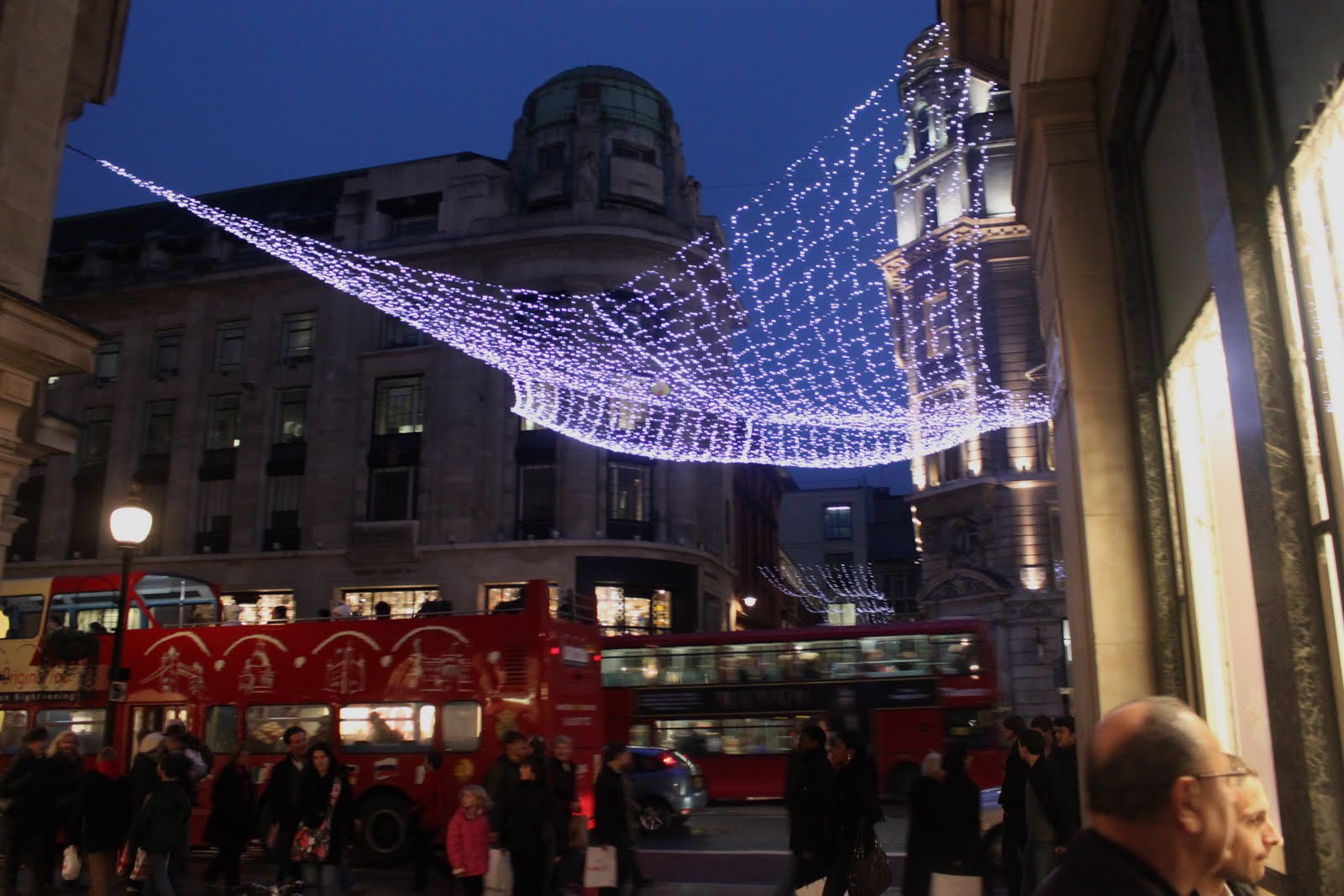


More significant, perhaps, was its other success, the street intended to separate the grime, crime and grind of Soho from the developing Mayfair, forming a barrier to movement, a firewall which, by discouraging the hoi polloi, has managed to this day to see to it that the newer area to the West would remain the most exclusive in London, pompously impressive and, however busy, always dogged by funereal pall.


Soon copied on an enormous scale in the Paris of Haussmann, this first step in a rationalised town planning process has now become only one weapon in a panoply, going under one of the science’s most evocative terms – because what I’d hoped to photograph at work was the phenomenon of the original planned-in ‘line of desire’. A phenomenon originating from informally formed paths across, for instance, grass, and perhaps extending to the internet, to routes between sites, a quick search revealing the term to have generated much traffic of its own, a site dedicated to their sightings perhaps a-plot, with the increasing planning demands of the growing metropoles, someone at some point had to learn to harness its forces for control, and that man was Nash.


If the city’s security forces can use this, clocking citizens as suspect for the simple fact of their having strayed from the more frequented thoroughfare, so surely could the blogger seeking to get a handle on the other forces at work in the city. Through this contrast in these shots, I’d be able to capture in the empty spaces some of what it is that eludes us, bringing us a step further, surely, to pinning down the subject of this blog.


But of course, arriving on site, almost nowhere could such a clear demarcation be found, and when it did seem to show itself, it lacked the expected significance. Clearly activity was much more dense on Regent than the surrounding streets, but the line was blurred, the differences indistinct and, unpredictable, not terribly telling, people forever wandering off down side streets, individually for a rest or to make a call or in couples or groups, to gather thoughts, cuddle, take stock, look at maps, even frequently in vast numbers, endless flows spilling off from the major lines into further others.


At some point, though, as I moved among these formless flows, nevertheless trying to make some sort of sense of it, it occurred to me that there might perhaps be another sort of contrast than that with the quiet side street. A sort of island in the constant movement would frequently occur, and this almost exclusively on the side streets, in the form of smokers, alone, grouped, standing, leaning against a wall, sitting on a step, squatting. Little friendships build up this way, one can see, among people who might usually find no bond between them other than these moments of chilly respite from the hectic activity of the offices or shops indoors, or the rush of pedestrians out-. This evocative sight, unintended consequence of the new smoking laws, was perhaps what would after all furnish something of the contrast I’d set out for, not in any way absolute, but, relative and vague, all the stronger for its instability.


Of course this sort of thinking’s photographic, and would come to nothing without shots. Such shots being almost of necessity portraits, I would have, of course, to approach, and, in the few minutes it would take their pretext to expire, elicit their complicity.


Talking to these people I experienced some of the rare moments when I regret having given up myself, all those years ago. Indeed, I was told by one that he had himself earlier given up, but the Regent Street job had got the better of this, these snatched opportunities too valuable now to forego.


I suspect that the profundity of the pleasure might be related, too, to my own failure to persuade more than a couple to agree to a shot. It’s not that anyone said as much, and the reasons given – because, without wanting to push, I would at least come away with a reason – were surprising for their variety. Some suggested they didn’t want their boss to chance on a posted shot of them, others that they kept their habit secret from absolutely everyone that knew, or felt they knew them. Certainly, when it comes to the big retailers, it proved a general rule that an employee will avoid recourse to a passage next to their own store, but always prefer one up, one down, or across.


Some held that they had something against photographs in general, others only those of themselves. One reason I appreciated, particularly, for its interest, was that she’d in fact given up, really, and a portrait would give her smoking the stamp, the appearance of a reality she’d rather avoid. There were those who were shy or anxious with strangers, and others who clearly didn’t want their colleagues there with them to see them taken for a ride, giving something, be it a mere image of one’s appearance, away to a stranger with nothing in return something of a mug’s game.


But mostly, though no one said it, or even seemed particularly to respond when I offered it as a reason, I suspect that, if the purpose of the moment was withdrawal, release from the hectic transactions of the busiest time of the year on one of the city’s most crowded streets, even in its very midst, to have the lens come rooting around in there on its own agenda would be desecration.

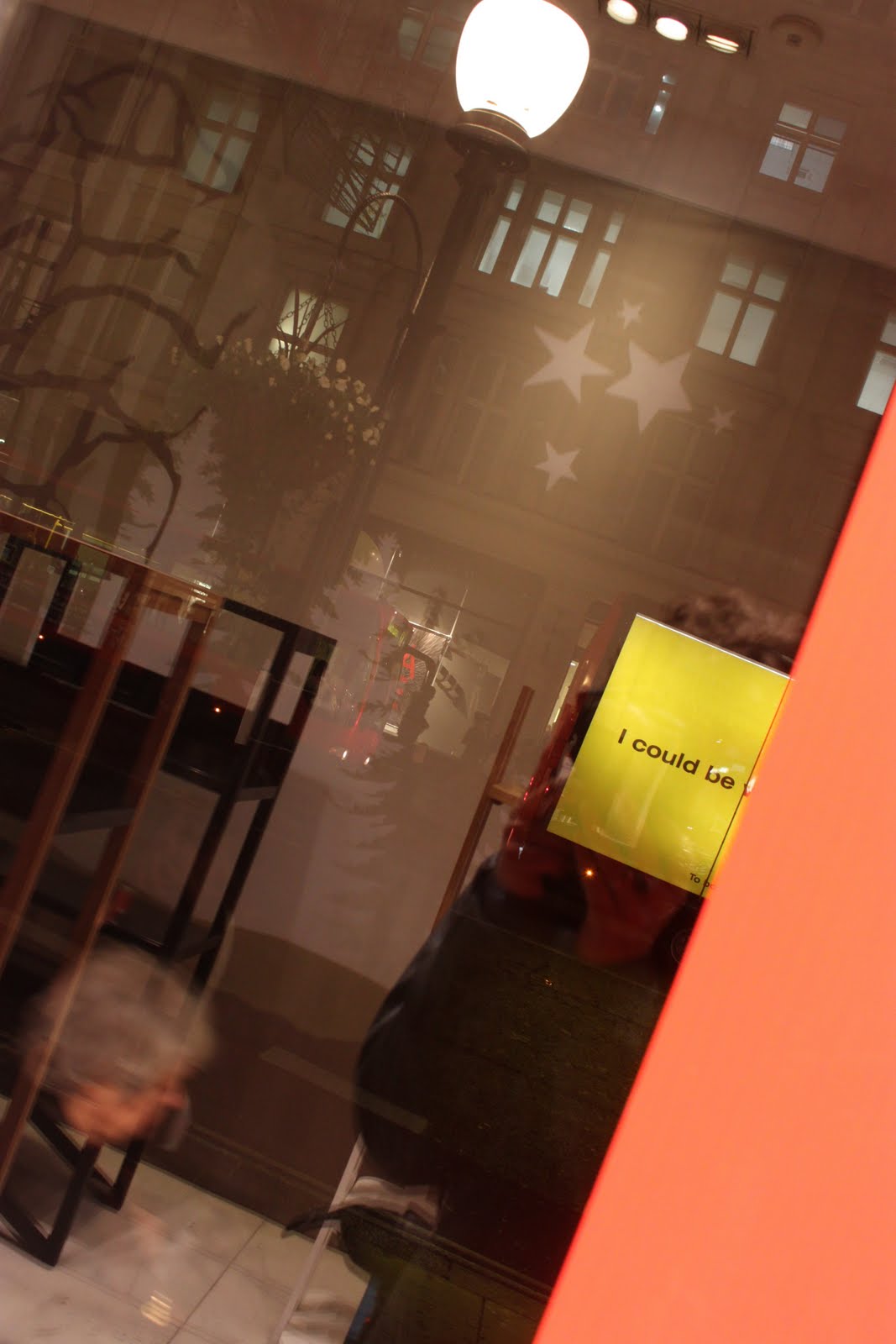


And so the substance of this post is given over to those who, on Regent Street, or mostly off, if only for a moment, cease to engage. The absence of almost all of these is a measure, of their success, certainly, but also perhaps of the blog, at least to have sought, approached what, if unrecordable, may well turn out to have been at the heart of the events considered a city.


Tuesday, November 3, 2009

Trail to Get Lost: Between Old Street and Barbican by The London Archaeologist


Been doing consultancy work on a recent find in the West City area. Fascinating work, it would have seemed to me when work was something I could count on. Since it ceased being regular, though, I've found myself disengaging, staring out of the window during meetings, or wistfully up at the palisade from digs, thinking only of getting back to the street.

It's not that I know what to do once there, how to approach it, what I'll find. There are none of the protocols as there are on the site, which, for all the mud, ruin and mess, maintain at their best a rigour and purity aligning them with the lab, the operating theatre, the crime scene. The greatest enjoyment of the inner-city dig for me had been, I suspect now, less the research than this ritual, entering a space through a gate shearing it of connections with everyday life, which you might imagine has ceased going on around it. My outing this time was up Old Street. It was the way I'd been going to work every day, and I knew it well, but something drew me back, the suspicion that there were finds of some sort that way even if I couldn't yet know what. I'd made discoveries there before, what's was more - the Well, the nearby Eye hospital -, should be able to do so again.

At the outset as I went, the journey was hobbled, though, with doubt. All the time I'd been working, to have been waiting only for this: to set out as though to work but with neither hope of remuneration nor aim. Around me the street was as busy as it always had been, as purposeful, but with a purpose which appeared to have no place for me.

I looked into the faces of passers by. They appeared at their most normal, but this their most monstrous. A recent post of the Landless Landlord focused my mind a little, reminded me of my own, what I'd been after, if these could all, perhaps, be the angels, if I could find them that way, or what for want of other words I've elsewhere dubbed gods.

But for that, I'd have to see each one not as a person on the way to work, which was what I was doing, still, automatically: making my way to a job that wasn't there for me. Somehow I was going to have to lose not only this, but my sense of the way. Arrive at a dig, but one without recognisable difference from its surroundings, no protocol, no palisade, seamlessly, leave the city without a gate, only ceasing to recognise what I knew.


A major artery, Old Street nevertheless manages to keep a certain hectic intimacy of scale, and its role of drawing a definitive line between the City atmosphere of offices to the South from the northerly residential zones gives itself a mixed feel all its own. It was in Soho I'd realised the place in the window of the glass itself, the worlds in the images it brings. Here would surely be others.

My first recourse was to lose myself among the reflections of the design showrooms - office and residential, furniture, furnishings, paints -, computer shops, cafes, hairdressers, watch repairers, clubs, bookbinders and printers. The sort of place to place the Barbican towers by Parliament, this, in a poster shop, or in a bar draw a plastic monster through a shop front opposite. Propose designs for a plane tree, colour chart a brick wall, screen save a street. A low cloud hung over the morning, refusing to lift in line with the breakfast forecast. There appear to be types of lost, and even with the seemingly propitious combination of windows from which might be hoped to appear the other space, I sensed that something withheld itself.


The cloud was already beginning to clear as I glimpsed what I felt would be my final opportunity. I'd crossed the Fleet valley of Farringdon Road, where Old Street, already having changed nominally to Clerkenwell Road, becomes Theobold's Road, though retaining its atmosphere briefly until Gray's Inn, beyond which the story would have to change. The final shop, on the north corner of the street, would have to turn things around. I knew what was there from having passed before, tagged it for a resort. If the reflection in the window of a magic shop didn't work, nothing would.


With these in the memory as stimulus, I returned back down Old Street, something achieved, perhaps, more sensitive now, clearer about what I was looking for, and with the sun, at last breaking definitively through the cloud, on my side, lifting images from one side of the street to the other, suppressing one detail and replacing it with another, less congruous.


I was surprised to see lunch rush in the cafés. This was a good sign, as it confirmed that at some point I'd lost touch with the time around me, and I joined a queue for service with the reassuring sense of involving myself in a ritual not my own. Indeed, I had to join twice, not having understood the local technique: order first, collect a ticket, and only then queue to pay. That I might have been at the airport, the cinema, the doctor's or a fairground boded well.


Getting up from the terrace table, I abandoned the Old Street plan. Whatever I meant by being lost, I wouldn't achieve - or indeed, if I now was, maintain that state by remaining in a bounded space. I needed to leave the windows. Besides, the light on Goswell Street, north/south, was by now so sharp in contrasts they weren't needed.


Passers were by now behaving strangely, flitting out of the corners of buildings, lost too, in the sense, I wasn't sure that there was a difference, that they can't find their own way or that I couldn't find them in some other way.


Finally, a fence, a trail of tape leading to it and, through it, a sculpture I vaguely recalled from my days at the Museum of London, surely what I'd been looking for but could only now that it confirmed that I and those I'd been tracking had been lost know it.